Regenerative agriculture and solar energy strengthen indigenous communities in the rainforests
The non-profit solar energy initiative of LOVE FOR LIFE e.V. provides indigenous peoples in Central and South America with sustainable access to renewable energy. In this way, the project promotes education, self-determination, women's rights and forest protection. The project is now entering its second phase: ecological agriculture and dynamic agroforestry ensure food sovereignty and the bioeconomy of the communities.
Nicole León/LOVE FOR LIFE
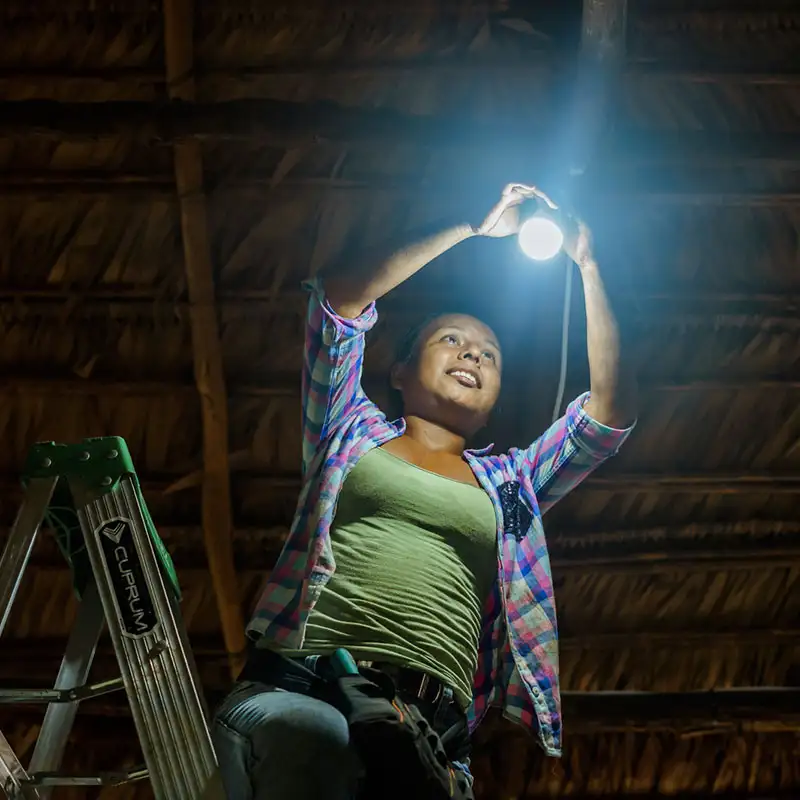
The training of men and women from the indigenous communities is a key component of IMAGINE LIGHT.
The solar project run by LOVE FOR LIFE e.V. has an impact on many areas of life in indigenous communities and promotes their cultural, social and economic self-determination. It trains local women and men to become solar technicians. They install, operate, maintain and repair the solar systems independently in their communities. Electricity from solar power has a positive impact on many areas of life.
LOVE FOR LIFE has now expanded its project. Indigenous communities receive training in agroecological and syntropic forest systems. This revives traditional knowledge, achieves food security, strengthens women's organisations and opens up new markets.
The project is based on the self-formulated vision of indigenous peoples in Central and South America to strengthen their self-determined movement for the survival of their cultures and the protection of the rainforest.
LOVE FOR LIFE has now expanded its project. Indigenous communities receive training in agroecological and syntropic forest systems. This revives traditional knowledge, achieves food security, strengthens women's organisations and opens up new markets.
The project is based on the self-formulated vision of indigenous peoples in Central and South America to strengthen their self-determined movement for the survival of their cultures and the protection of the rainforest.
Mike Kollöffel/LOVE FOR LIFE
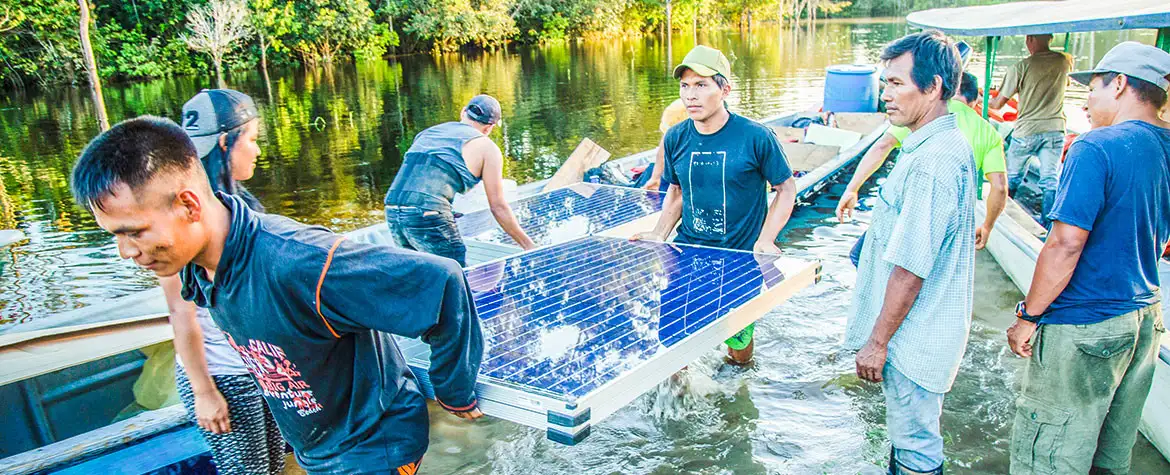
Secluded in the rainforest: The project villages’ access to renewable energy is a feat of strength – which is worthwhile for the people and nature.
Our support: solar power
Access to electricity opens up new opportunities for sustainable development and income-generating activities. This significantly contributes to reducing poverty. In addition, the project actively supports rainforest conservation, which is the indigenous peoples' 'life insurance'. The rainforest is their home, their supermarket, their university, their pharmacy – it is their life.
Alex Mundt/LOVE FOR LIFE
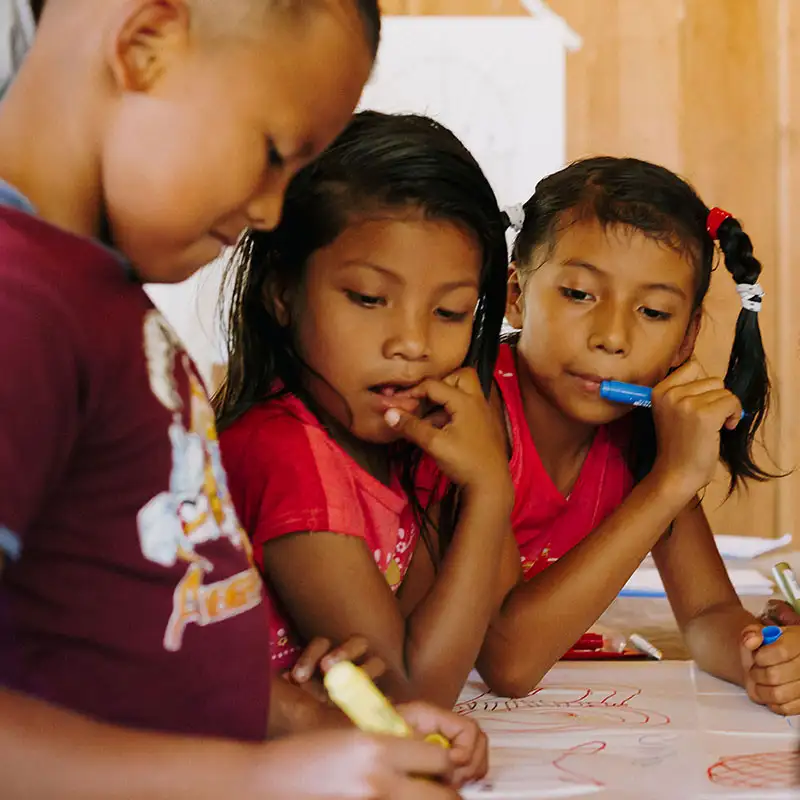
Education is an important indicator of the project's impact.
The shelf life of food increases decisively through the use of refrigerators. Previously, people hunted and sold the meat to be able to afford diesel to run a generator. Access to solar energy allows people to feed themselves from their hunting prey.
Clean energy replaces dangerous and harmful paraffin lamps and candles, as well as expensive and polluting diesel generators. This has immediate benefits for people, too: Indoor air quality improves, and respiratory health and eyesight are preserved. Births at night can be accompanied by light, measurably increasing the life expectancy of both mother and child. People can refrigerate life-sustaining medicines, thereby make them last longer.
Clean energy replaces dangerous and harmful paraffin lamps and candles, as well as expensive and polluting diesel generators. This has immediate benefits for people, too: Indoor air quality improves, and respiratory health and eyesight are preserved. Births at night can be accompanied by light, measurably increasing the life expectancy of both mother and child. People can refrigerate life-sustaining medicines, thereby make them last longer.
Even after dark – in the tropics the sun sets early all year round – the energy can, for example, be used for further education. In particular, it allows children to still play, draw and learn even in the evening. Studies have shown that one hour of more light per day significantly increases educational opportunities. Education is a key factor for new opportunities and sustainable poverty reduction!
Women, in particular, benefit from the fact that the days become longer with light from renewable energy. They can use their time for work at home more flexibly. Their home becomes a healthier, safer and more comfortable place. And they can open up new economic and social development opportunities. In addition, the project specifically strengthens women's organisations and offers women workshops and training.
Better communication and information opportunities, less dependency and increased self-confidence support the indigenous communities in their fight against the overexploitation of the rainforest. Protecting the forests sustains life and reduces CO2 emissions.
Women, in particular, benefit from the fact that the days become longer with light from renewable energy. They can use their time for work at home more flexibly. Their home becomes a healthier, safer and more comfortable place. And they can open up new economic and social development opportunities. In addition, the project specifically strengthens women's organisations and offers women workshops and training.
Better communication and information opportunities, less dependency and increased self-confidence support the indigenous communities in their fight against the overexploitation of the rainforest. Protecting the forests sustains life and reduces CO2 emissions.
Nicole León/LOVE FOR LIFE
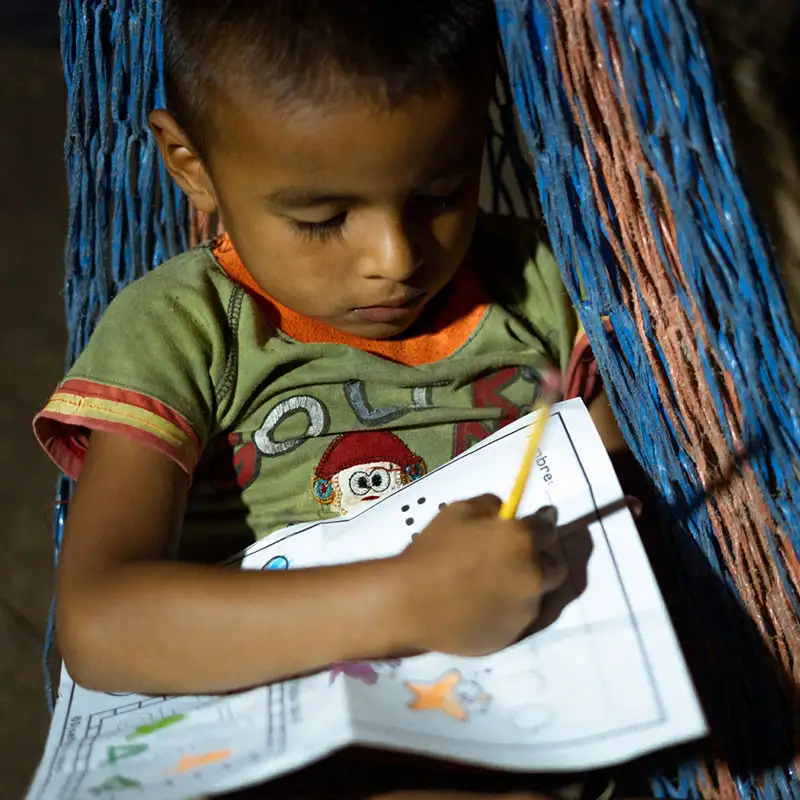
The early evening hours throughout the year can also be utilised.
Our support: regenerative agriculture
In order to further improve the livelihoods of indigenous communities in the long term, the project works with indigenous peoples to strengthen and create regenerative, ecological food and agroforestry systems. The RAPUNZEL One World Organic Foundation provides financial support for training courses and other measures.
Food insecurity, health problems and a lack of income opportunities for indigenous peoples remain a challenge. LOVE FOR LIFE is addressing this issue in collaboration with local women's organisations and with financial support from the Rapunzel Foundation:
400 marginalised families from 15 Cabécar and Emberá settlements in the rainforest are receiving training in agro-ecological and syntropic forest systems to promote biodiversity and ensure climate-resilient yields.
400 marginalised families from 15 Cabécar and Emberá settlements in the rainforest are receiving training in agro-ecological and syntropic forest systems to promote biodiversity and ensure climate-resilient yields.
40 indigenous knowledge mediators are passing on the content. The project also draws on traditional, almost lost knowledge of sustainable agriculture.
In addition, the target group is establishing new distribution channels and setting up markets to promote local economic cycles. The women's organisations also receive targeted training, for example in project management and public relations. This strengthens their role and supports the sustainable impact of the project.
In addition, the target group is establishing new distribution channels and setting up markets to promote local economic cycles. The women's organisations also receive targeted training, for example in project management and public relations. This strengthens their role and supports the sustainable impact of the project.